British Science Week!
We have been collecting our fingerprints and classifying them.
Can you guess who this famous, fictional robot is?
The teams with their arguments carefully prepared...
'In Science, we learnt about eating and digestion. We explore ways of keeping our teeth healthy.
In class, we carried out the 'Apple Cavity Experiment'. Our experiment was to explore how sugar affects our teeth – using apples!
We had three apples – one clean untouched apple, one with a hole and one with a hole and sugar inside. After 24 hours, I examined the apple and found that the healthy apple was still healthy. The one with a hole changed in colour, the hole was very dark. The one with the hole and sugar made had lots of liquid (slimy).
I enjoyed how apples can be shown/revealed and linked to our teeth and the experiment we carried out.' - Muhammad H
'Ramadan is a blessed month of Islam. It is a time we only eat and drink after iftar and suhoor.
In Ramadan, I read qur'an, pray my five daily prayers. I am trying to learn the Arabic language and give salaam more often to everyone. All these things help us achieve good deeds and this is a blessing from Allah.
In this blessed Ramadan, I have enjoyed having so many good deeds, and I've enjoyed having my good deeds multiplied. This is Allah's blessing. If you eat by accident, and you're fasting, your fast is not broken. These are signs of Allah's mercy and blessings.
For suhoor I had: weetabix, nutella, cookies, milk and dates. For Iftar, I ate: dates, milk, fries, hot dogs, chicken wings nuggets, and pink milk. All this food is a blessing from Allah.
After Ramadan, we have Eid. You can eat as much as you want, especially after eid prayer – alhamdulilah!!!' - Kiswah S
Each child created their own rainforest diorama, carefully including animals, plants, and the different layers of the rainforest.
Through this project, Year 4 has been learning about the life cycles of plants and animals and how everything in nature depends on each other. They explored the balance and harmony in creation, reflecting the perfection of Allah’s world. We also discussed how Islam teaches us to care for the environment and all living creatures. It has been wonderful to see their creativity, learning, and faith come together in such a hands-on project!
'In Art, we have been learning about rainforests. We used coloured paper, shoe boxes, outdoor leaves, twigs, felt and cut out animals to create our own diorama.' - Imaan & Tasneem
'Some people added waterfalls, lakes, flowers, and branches on the sides. I loved everything about the rainforest diagram. I love nature, and I'm happy I got to use my creative side.' - Fatima Z


In Year 4, we have been enjoying learning about The Ghost Thief podcast story. We listened carefully to each episode, talked about the characters, and shared our ideas about what might happen next. We also learnt how voices, sound effects, and music can make a story exciting and help listeners imagine what is happening.
After listening to the story, we created our own podcasts! We planned our ideas, wrote our own scripts, and practised speaking clearly and with expression. We worked together to record our voices and thought carefully about how to make our podcasts fun and interesting for others to enjoy. This helped us build confidence, creativity, and teamwork skills.
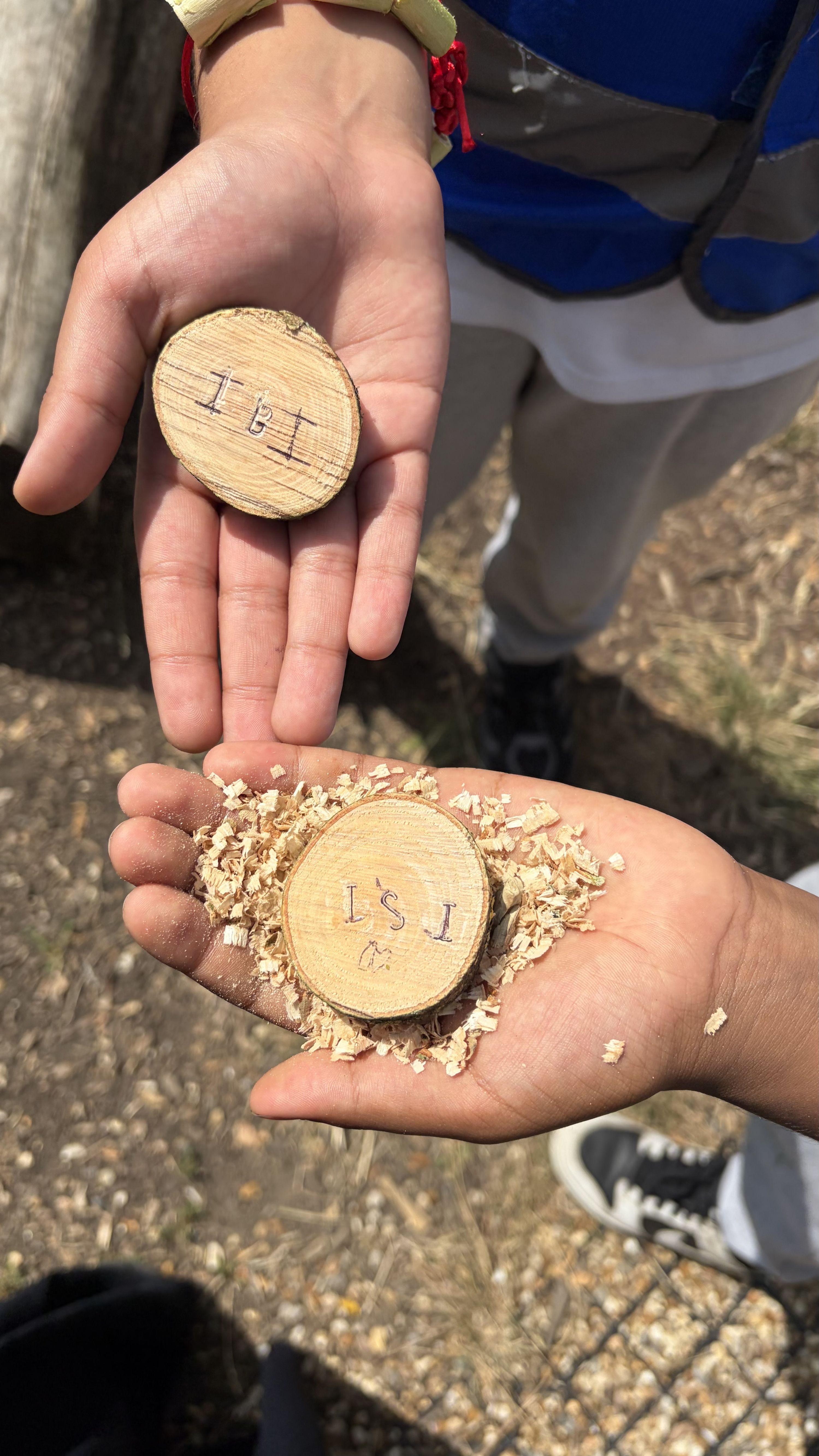
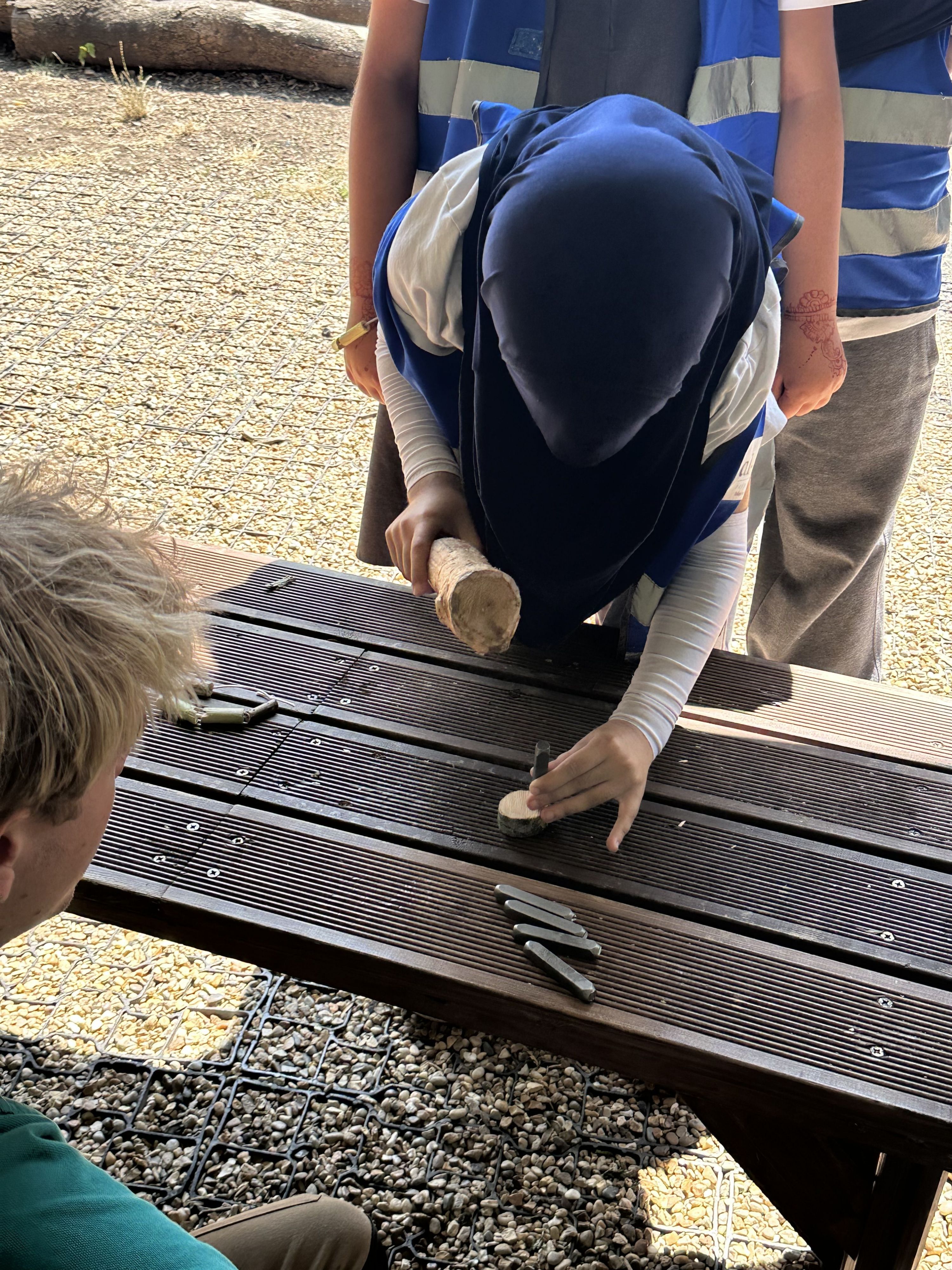
We have been learning about the Anglo-Saxons, Picts and Scots. This week we made our own Pictish stones using air dry clay. A Pictish stone is a monument made from stone that is generally carved with symbols and designs that represent various clans and lineages. We moulded our stones using our hands. We carved our initials into our stones using the Ogham alphabet.
For our drop-down day this half-term, we explored the oneness of Allah and His creations. We went to our local park to use teamwork skills to build iron men.

As part of British Science Week, children created Sundials. They learnt that a sundial works by using the sun’s light to create shadows and most have a ‘gnomon’ – a thin rod that will cast a shadow onto a flat plate. The Earth is constantly rotating on its axis, which means the position of the Sun appears to change in the sky throughout the day. The position of shadows, therefore, also changes throughout the day and, by tracking them, we can measure the passing of time.

Year 4 have been looking at examples of adjectives in everyday items. They discovered that the more expensive the food item, the greater the number of adjectives used in the description. They also identified adverbs.
Why don't you go on an adjective hunt in your home ?