Who loves Maths? Me!
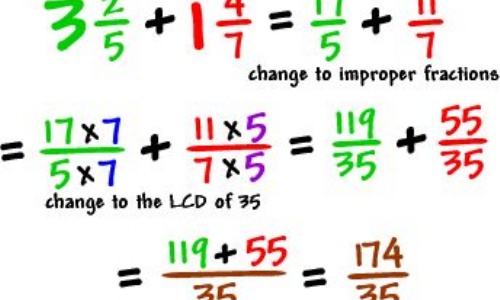
'In Maths, I have learnt how to add improper fractions, and it was really enjoyable because as first I found it had, but then it became easy'. - Umar S
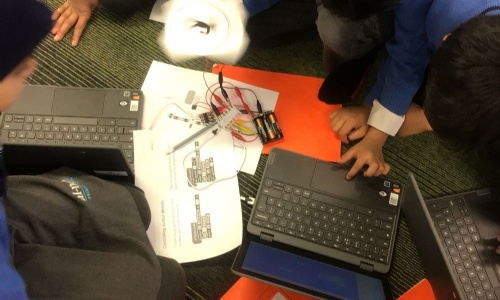
In computing, we used the crumble kit and learnt how to program the crumble and make the motor spin forwards and backwards. We did this by connecting a motor to the circuit. I really enjoyed this lesson as we learnt new skills and got to experiment programming.
In southeastern Europe, called Bosnia and Herzegovina—or simply Bosnia for short, is a country with a fascinating history, beautiful landscapes, and amazing traditions. Let’s get started by learning about the geography of this country. Bosnian heritage is full of beautiful traditions, amazing food, and a rich history. Whether it’s food, or the people, there’s so much to love about Bosnia.
"We learnt about Bosnia as part of cultural heritage week! We learnt about the various foods, clothing and language. Last week we had non-uniform day, and we dressed up in our own cultural dress! We had lots of fun!" - Aysha P
In the UK, around 80% of the population live in urban areas and 20% in rural areas.
Some parts of the UK have many more people than others - Scotland's mountains and remote islands have very few inhabitants, while England is the most crowded country, with London being the largest city in the UK.
'In Geography we learnt about urban areas and greenspaces. Greenspaces are important for our environment to improve our health and our quality of breathing. Rural places are very calm and peaceful and there are many farm animals. Urban spaces are usually in the city area. They have many vehicles and very tall buildings. It is much noisier and more chaotic. I learnt that urbanisation is the increase of the population or the increase in building in a city.
How can we save our planet and green spaces? We can save our green spaces by planting more trees and building less.' - Zahra K
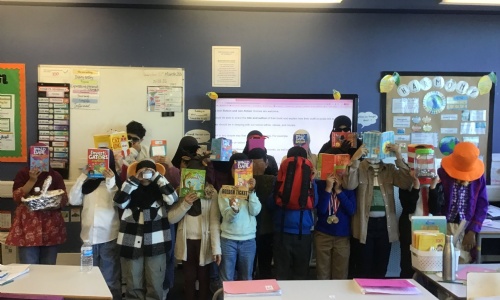
'In English, we are learning about a book named The Boy in the Tower by Polly Ho-Yen. I predicted that this book would be about lots of buildings falling and causing a toxic disaster. In this book, there is a boy named Ade and his best friend, Gaia. Ade's mum does not get up from her bed and Ade is getting worried. I think that The Boy in the Tower is very interesting and very surprising. The theme of this book is falling buildings, and it was Ade's and Gaia's job to find out why.'
- Maham I
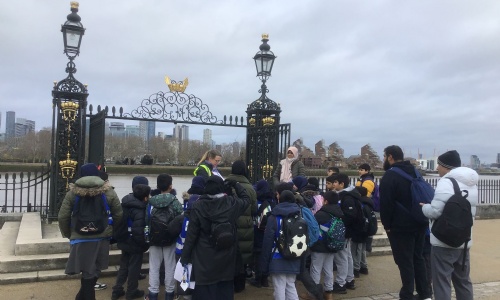
For our Drop Down Day, we were visited by a member of Thames Water Trust, who gave us an overview of the River Thames, river wildlife and environmental issues caused by pollution. We also visited our local body of water and carried out a water pollution experiment to see how different pollutants impacted living pond weed and algae.
In Year 5, we have learnt what makes a video effective by understanding that video is a visual medium, identifying its key features, and comparing the different elements found in various videos.
Additionally, we have explored how these features work together to engage audiences and convey messages clearly. By analysing different types of videos, we can evaluate the techniques used to capture attention, communicate ideas, and enhance storytelling.
This term, our focus is on how we can protect marine life. Year 5 has been exploring this important topic throughout the term.
A lifecycle is the different stages a plant or animal goes through during its life.
Did you know ageing is a completely natural part of the life cycle of humans, but there are lots of things you can do to slow down the process and stay fitter for longer?
Life is a maths equation. In order to gain the most, you have to know how to convert negatives into positives.
As part of our study on plastic pollution, we spent time turning our classroom into a polluted sea to highlight the impact of plastic pollution on sea life and the importance of recycling plastic.
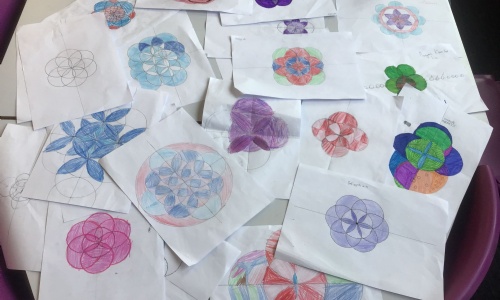
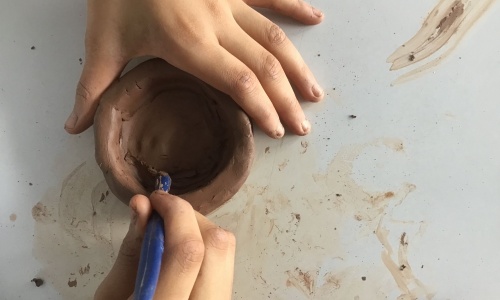
' In Art we have been looking at the famous artist named Clarice Cliff. We have also been recreating some other designs in class. We looked at her unique use of bright colours and abstract design. We had so much fun doing this' Mahum
' In Art, we have been looking at the work of the artist Clarice Cliff. We drew apples, bananas, bowls and shields. I really enjoyed painting the bowls and shields and enjoyed drawing the mug' Sumayya S
' I have learnt in Art that Clarice Cliff was famous for pottery, and she used bright colours to draw fruits and other designs' Jeyhan